

Horny Goat Weed
Epimedium
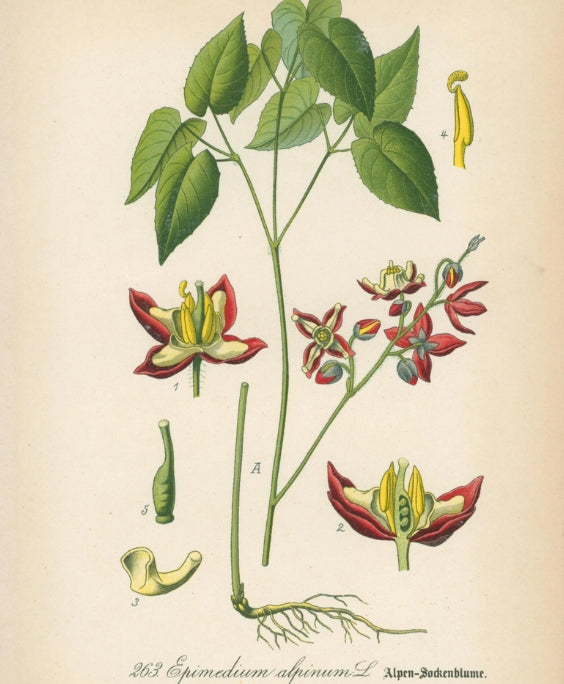
Family: Berberidaceae (Barberry)
Which probiotic is it in?: Men
Habit and cultivation: Several of the main species are naturally native to southern central and northern costal China and also Korea. There are other Epimedium species found and now cultivated in the western world but not necessarily exhibiting the same properties as that known as Horny Goat Weed.
Actions (known for): Traditionally known as an energiser particularly for enhancing kidney energy which correlates to enhancing circulation, balancing hormones and urinary and reproductive health. Also for atherosclerosis and stroke recovery and for men for enhancing libido and sexual function.
History of Horny Goat Weed
Parts used from the Horny Goat Weed
Decoction of the leaves and/or flowers which are edible
Constituents (bio available chemicals):
Flavonoids one of which is icariin, a mild vasodilator believed to mimic the effects of testosterone and increase nitric oxide amongst other things such as increasing osteoblasts.
Nutritional constituents:
Leaves and flowers have essential nutrients vitamins A, C, and E, along with minerals like calcium, magnesium, and potassium plus flavonoids
Indications:
Traditional use is for cold damp poor circulation and hardening and restriction of arteries – in combinations with other herbs also other conditions such as osteoporosis where hormone balance and good circulation are important for bone metabolism.
Dosage:
Typically 250 to 5000mg daily depending on species bio-available constituents and health.
British Herbal Pharmacopoeia
Cautions for therapeutic doses
High therapeutic doses can create symptoms of dry mouth, digestive upset and changes in blood pressure which some experience with headaches. There are though no known negative interactions with foods, supplements or medications but use care if taking hormone or blood pressure medications or blood thinners or have allergies to the Barberry family.

