


Summary
- Period bloating is common, and it can appear before your period, around ovulation or during bleeding.
- Bloating before your period can be linked to changing levels of progesterone and oestrogen, which influence fluid balance and the way your bowel moves.
- The most useful clue is often timing. Try keeping a simple cycle diary for two or three months.
- Small, repeatable habits may help you feel more comfortable: keep drinking water, be mindful of salt, move in a way that feels good, try smaller, unhurried meals, rest and use warmth for comfort.
- Persistent bloating should not be dismissed as hormonal just because you menstruate. Your GP can help explore possible causes.
In this guide
- Why do I get bloated before my period?
- Ovulation bloating and trapped wind
- Bloating during your period
- Hormonal bloating vs everyday bloating
- How to reduce period bloating
- Supporting your gut all month
- References
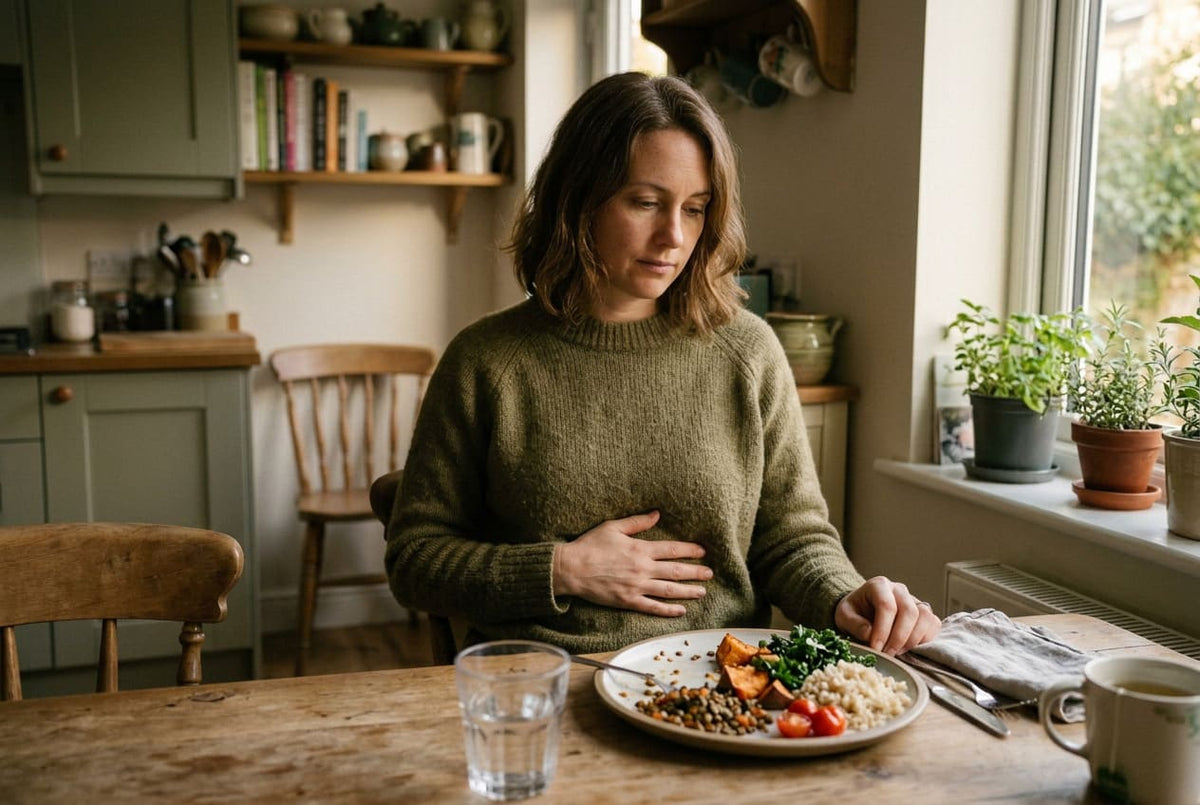
If your jeans fit perfectly in the morning but feel two sizes too small by evening, your menstrual cycle might be part of the story. Period bloating is common, and it can appear before your period, around ovulation or during bleeding. Hormone changes can affect fluid balance, bowel habits and how sensitive your gut feels. The good news is that a few gentle habits may make those days more comfortable, without declaring war on your favourite foods.
At microbz, we love reminding people that the gut is a living ecosystem, not a machine that performs exactly the same way every day. Your cycle changes through the month, and your digestion can change with it. Understanding those rhythms is a much kinder place to start than blaming your body for every uncomfortable afternoon.
Why do I get bloated before my period?
Bloating before your period can be linked to changing levels of progesterone and oestrogen. These hormones influence fluid balance and the way your bowel moves, so you may notice a fuller tummy, constipation or more sensitivity in the days leading up to bleeding. Not everyone experiences the same pattern, and hormones are rarely the only factor.
After ovulation, progesterone rises during the second half of the cycle, known as the luteal phase. Progesterone can affect smooth muscle activity, including in the digestive tract. Some people find their bowel habits slow down at this time, which may leave them feeling heavy, uncomfortable or more prone to trapped wind. Research into the precise effects of menstrual hormones on gut transit is mixed, so it is better to think of this as one possible contributor than a universal rule.
Fluid retention may also make your abdomen feel puffier before your period. That feeling is not necessarily all gas, and it does not mean you have suddenly gained body fat. Bloating is the sensation of fullness or pressure; distension is when your abdomen actually increases in size. You can have one without the other, which helps explain why two people can describe very different experiences of hormonal bloating.
Then there is your gut microbiome. Trillions of microbes live within us, helping break down parts of food we cannot digest ourselves. Their fermentation produces gases as a normal part of digestion. Hormones, bowel movement, food choices and gut sensitivity can all influence how that process feels. Scientists are exploring connections between the microbiome and menstrual health, but it would be too simple to say that a particular microbial imbalance causes period bloating.
Ovulation bloating and trapped wind
Does your tummy sometimes feel swollen halfway through the month, long before your period is due? Ovulation bloating is something some women notice around the time an egg is released. Hormone levels change quickly at this point, and a small amount of fluid or local discomfort associated with ovulation can sometimes make the abdomen feel different. Other causes, including constipation or ordinary digestive gas, may be happening at the same time.
Some people also describe a sharp twinge on one side of the lower abdomen around ovulation, sometimes called mittelschmerz. This is not the same thing as trapped wind, even though the sensations can be easy to confuse. Gas discomfort may move around, come with gurgling or improve after passing wind; ovulation discomfort may be more localised. Neither description can reliably diagnose the cause of pain on its own.
Bloating during your period
When your period begins, the digestive picture can change again. Some women who felt constipated before bleeding notice looser stools or more frequent trips to the loo once it starts. Prostaglandins, substances involved in helping the uterus contract, can also affect the bowel. This is one reason period cramps and changes in digestion sometimes arrive together.
You may feel more sensitive to normal digestive sensations at this time, especially if you are tired, stressed or dealing with cramps. A stomach that feels perfectly ordinary one week can seem much more uncomfortable the next. That does not mean the discomfort is imagined; the gut and brain communicate constantly, and our perception of internal sensations can vary.
There is no single pattern to expect. Some people bloat most before their period, others during it, and some barely notice a difference. Rather than comparing yourself with someone else, look for the rhythm that is normal for you. A new or worsening pattern deserves attention, even if it happens around the same time every month.
Hormonal bloating vs everyday bloating
How can you tell whether your cycle is involved or whether something else is making your tummy uncomfortable? The most useful clue is often timing. Hormonal bloating may come and go in a recognisable pattern, perhaps building a few days before bleeding and easing afterwards. Everyday bloating may be more closely associated with meals, constipation, certain medicines or changes in routine. Of course, both can overlap.
Try keeping a simple cycle diary for two or three months. Note when your period starts, when bloating appears, whether your bowel movements are hard or loose, and whether you notice cramps, stress or changes in eating. You do not need a complicated tracker. A few notes on your phone are enough to reveal patterns you might otherwise miss.
Persistent bloating should not be dismissed as hormonal just because you menstruate. Your GP can help explore digestive, gynaecological and other possible causes.
How to reduce period bloating
There is no magic switch for period bloating, but small, repeatable habits may help you feel more comfortable. The aim is to support your body, not to force it into a strict new regime every month.
Keep drinking water
It may seem counterintuitive when you feel puffy, but cutting back on fluids is not the answer. Drinking regularly helps support normal bowel function, especially if constipation is adding to the discomfort. Keep water nearby and sip throughout the day rather than trying to catch up all at once.
Be mindful of salt, without making food a battleground
Very salty meals can contribute to fluid retention for some people. If you notice a pattern, try a few less salty choices in the days when you usually feel swollen. There is no need to eliminate salt or follow a restrictive diet, and the evidence for salt reduction specifically relieving menstrual