
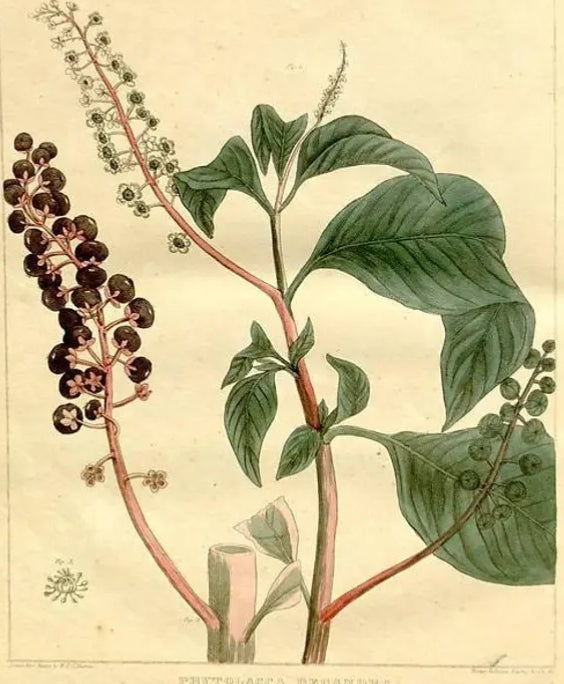
Poke Weed
Phytolacca Americana
Family: Phytolaccaceae
Which probiotic is it in?: Men
Habit and cultivation: Native to North America and naturalised to Europe and Asia as far as we know.
Actions (known for): For skin conditions as a salve or oil. Immune stimulant.
History of Poke Weed
Parts used from the Poke Weed
Root, leaves and berries with caution to never ingest the seeds and only 1 at a time when fully black and ripe.
Constituents (bio available chemicals):
Each part of the plant contains triterpenes and saponins, oleanolic acid in the roots, glucosides and stigmasterol and lectins. In the seeds phenolic aldehyde and caffeic aldehyde are the toxic components. Also contains glucosides and flavanols.
Nutritional constituents:
Carbohydrates, fibre, protein, fat and vitamins A, B2, C, K, and manganese. It contains low levels of vitamin B1, vitamin B6, iron, calcium, magnesium, phosphorus, and potassium.
Indications:
Stagnant inflammation, skin ailments and being researched for its anti-tumour action.
Dosage:
1-3 single drops daily. It is more easily taken homeopathically. Young spring leaves, boiled with water discarded short-term.
British Herbal Pharmacopoeia
Cautions for therapeutic doses
To treat with respect, individuals react differently, so consult a herbalist for your own personal guidance. Not deadly unless seeds are consumed, but there are side effects with more than your body tolerates. Berry flesh and juice on the skin is not toxic.

