
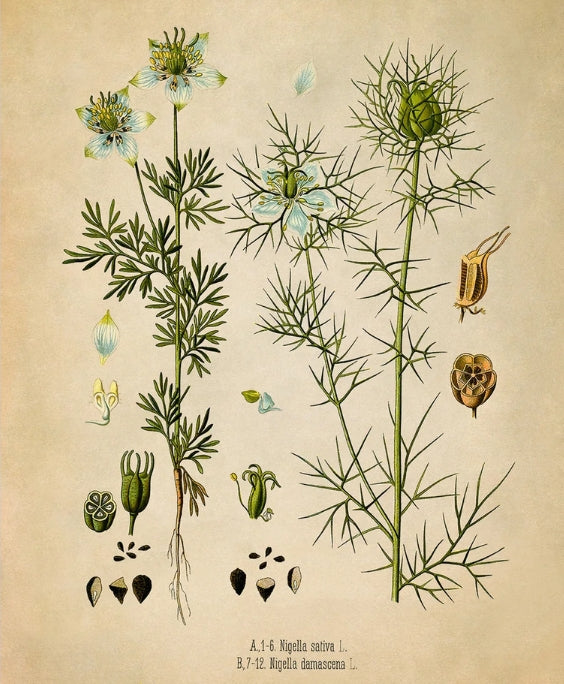
Nigella Sativa (Black Cumin)
Family: Ranunculaceae
Which probiotic is it in?: Men
Habit and cultivation: Native to Southern Europe, South Africa and South-west Asia, also cultivated as an annual in Europe / UK and the Middle-east.
Actions (known for): Anti-oxidant, detoxative, anti-arthritic, gastro-protective, hepataprotective, anti-inflammatory, antitussive, antifungal, stops wound bleeding, has healing and antibacterial properties. Also balances insulin sensitivity and great for skin health.
History of Nigella Sativa (Black Cumin)
Parts used from the Nigella Sativa (Black Cumin)
Black seeds
Constituents (bio available chemicals):
Very many but the main ones are various quinones, terpenes and alkaloids. Also water-soluable alpha-hederin. Most of the pharmacological properties of N. sativa are mainly due to the quinine constituents, of which thymoquinone is the most abundant.
Nutritional constituents:
Used as a spice and food preservative. The seeds of N. sativa contain protein (26.7%), fat (28.5%), carbohydrates (24.9%) and vitamins and minerals like manganese, copper, phosphorus, iron, magnesium, zinc, but it is the fatty oil rich in unsaturated fatty acids, mainly linoleic acid (50-60%), oleic acid (20%), eicodadienoic acid (3%) and dihomolinoleic acid (10%) with 30% saturated fats which is a really valuable nutritive source.
Indications:
Colitis, helicobacter pylori, male fertility, type II diabetes, fungal conditions internal or external, epilepsy, prostate conditions.
Dosage:
Seeds can be used in cooking as a herb – traditionally 1 -2tbsp fresh oil a day for internal conditions.
British Herbal Pharmacopoeia
Cautions for therapeutic doses
Take caution with blood pressure meds or blood thinners, and stick to normal culinary amounts in pregnancy

