

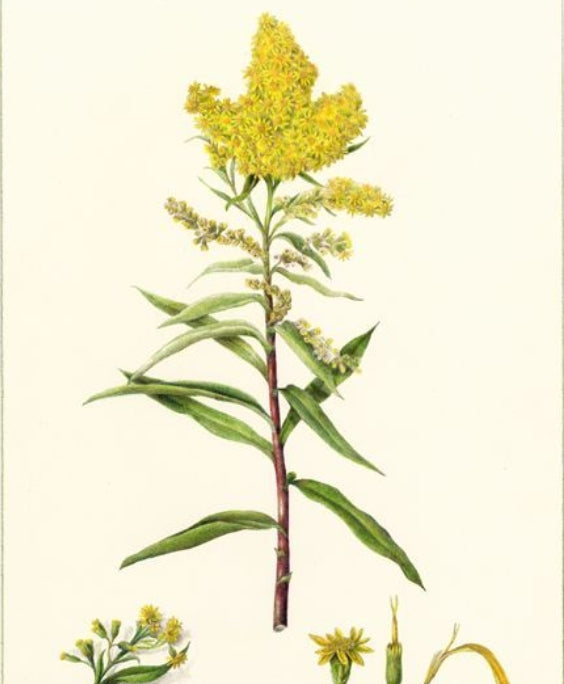
Golden Rod
Solidago canadensis, S. odora, S. vigaurea
Family: Asteracae
Which probiotic is it in?: Men
Habit and cultivation: UK, Europe, North America and Asia
Actions (known for): Bladder, Urinary tract, Kidneys, both nourishes and restores balance to the kidneys and as an astringent herb helps tone the urinary tract.Diuretic, decongestant
History of Golden Rod
Parts used from the Golden Rod
Leaves and flowers harvested in the autumn.
Constituents (bio available chemicals):
Saponins
Nutritional constituents:
High in Rutin which is important for capilliary strength and cardiovascular system and rich in anti-oxidants. Resinous flavour and often used in cooking in North America.
Indications:
For use as tea or tincture or poultice for urinary tract infections or weakness, skin healing, seasonal allergies, flu and colds and cardiovascular system tonic. Also aches, strains and pains.
Dosage:
3-5g to 150ml water, 2-4 cups of tea per day, away from meals. Tincture 1:2 ½ tbsp in a cup of water up to 3 times a day. Up to 1g dry herb a day.
British Herbal Pharmacopoeia
Cautions for therapeutic doses
Avoid with Asteraceae allergies and in pregnancy. No known overdoses, but can be drying and to avoid if taking diuretics or use instead and caution with diabetic medication.

