


Ashwaganda
Withania Somnifera
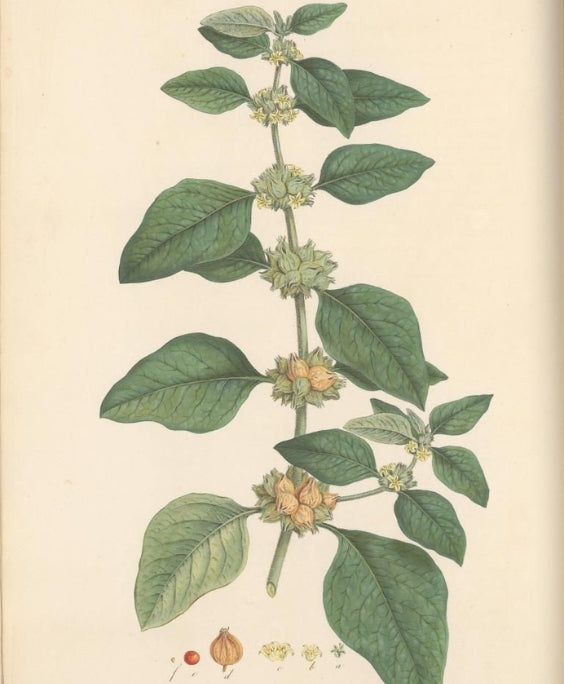
Family: Solanaceae (nightshade)
Which probiotic is it in?: Men & Sleep
Habit and cultivation: Native to India, Pakistan and Sri Lanka, cultivated in dry, warm areas of the Mediterranean, the USA and Africa as well.
Actions (known for): Traditionally used for being revitalising and deeply nourishing, with qualities that benefit the stress of today’s culture due to balancing the nervous system through nurture rather than stimulation, working on the hypothalamic, pituitary, and adrenal axis. Also for overall immune strength and male/female fertility/hormone balance. Warming, moistening, raises metabolism, stimulates digestion, probably through balancing and oiling the nervous system, clears mucus and improves circulation. A highly adaptogenic, constitutional strengthener.
History of Ashwaganda
Parts used from the Ashwaganda
Traditionally, the root, but berries and leaves are sometimes used medicinally.
Constituents (bio available chemicals):
Steroidal alkaloids and lactones: sominine, somniferine, withanolides, and anferine.
Nutritional constituents:
Iron, antioxidants, tannins, and potassium.
Indications:
Stress, burnout, depletion/atrophy, anxiety, insomnia, neurodegenerative disorders. ‘Mens tonic’ traditionally and for low sperm count, inflammatory autoimmune disorders.
Dosage:
Traditionally, 1 gram a day long term can be more therapeutic.
British Herbal Pharmacopoeia
Cautions for therapeutic doses
Avoid with nightshade family sensitivities. Ashwaganda is one of the safest adaptogenic herbs, but essential to work with a herbalist if pregnant or on hormone therapy or taking steroids. Avoid with thyroid meds or while on sedatives. Due to high iron content, avoid high amounts if iron levels are normal or high. Always important to have an understanding of the whole underlying condition and person, and as with all things goo,d to stop when balance is attained.

