

Arnica
Arnica Montana
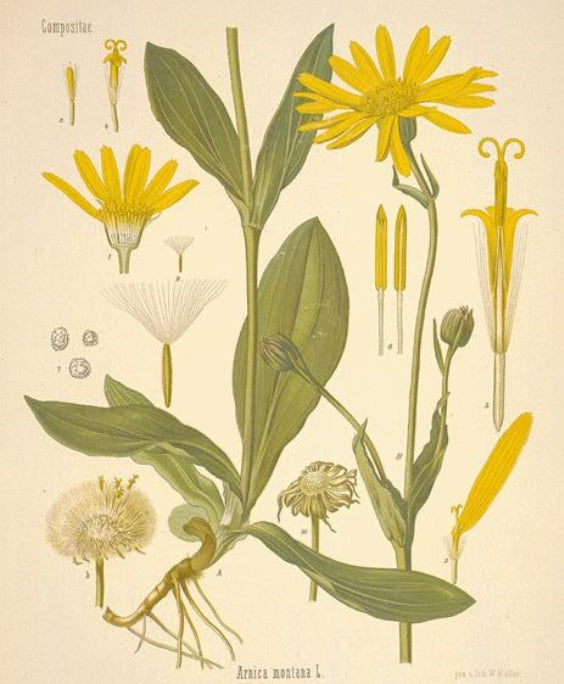
Family: Asteracae
Which probiotic is it in?: Men
Habit and cultivation: Native to Europe, but found in the mountain slopes of North America, northern Asia, and Siberia.
Actions (known for): Arnica is a major trauma remedy, easing anxiety and shock. Its primary influence is on blood and circulation system and muscoskeletal system. Although anti-inflammatory it is warming. It's specific for bruises, contusions, and essential impact injury without splitting the skin where circulation has been disrupted and heat helps eventually. Arnica soothes sore muscles, reduces pain and aids in reducing inflammation and bruising bringing microcirculation to the damaged tissues, muscles and/or joints.
History of Arnica
Parts used from the Arnica
Flowers and occasionally the rhizomes
Constituents (bio available chemicals):
Arnicin, coumarins, rutin, inulin, sesquiterpene lactone - helenalin, flavonoids (quercetin and kaempferol derivatives), mucilage, and essential oils.
Nutritional constituents:
Not to be eaten
Indications:
Where there is stagnation of circulation, shock, trauma, impact injury but no broken skin, debilitation.
Dosage:
1-3 drops of tincture diluted in water or as a balm
British Herbal Pharmacopoeia
Cautions for therapeutic doses
Arnica, in large doses can be very irritating to tissues and could cause blistering of the intestinal mucosa and so not used generally as an internal herb. Contraindicated in Pregnancy. No known side-effects in homeopathic doses and no known herb/drug interactions

