

Shepherd’s Purse
Capsella Bursa-pastoris
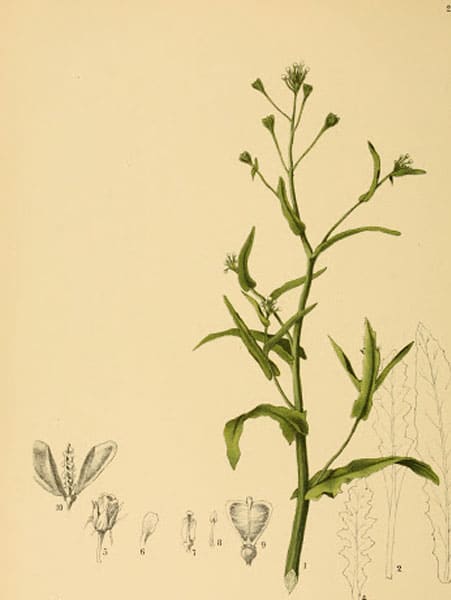
Family: Brassicaceae
Which probiotic is it in?: Shepherd’s purse is a key herb in Bio-Live Women.
Habit and cultivation: Native to Europe and considered a weed, it now grows throughout the world. It is the second most prolific wild plant in the world. Grows in most soils, cultivated or wild areas and wastelands everywhere.
Actions (known for): Anti-haemorrhagic (systemically), anti-haemorrhagic (topically), styptic, anti-haemorrhagic (uterine), anti-inflammatory and diuretic.
History of Shepherd’s Purse
Parts used from the Shepherd’s Purse
Above ground parts.
Constituents (bio available chemicals):
Acetylcholine, bursic acid, choline, diosmin (flavonoid glycoside), fumeric acid, tyramin and polypeptides.
Nutritional constituents:
Vitamin C and K. Minerals: calcium, iron, potassium, sodium, sulphur and zinc.
Indications:
Dysmenorrhoea, menorrhagia, metrorrhagia, nose-bleeds, uterine bleeding and catarrh (genitourinary tract).
Dosage:
Liquid extract (1:2): 20-40ml per week. Infusion of dried herb: 1-4g 3 x daily.

