
Saffron
Crocus sativus
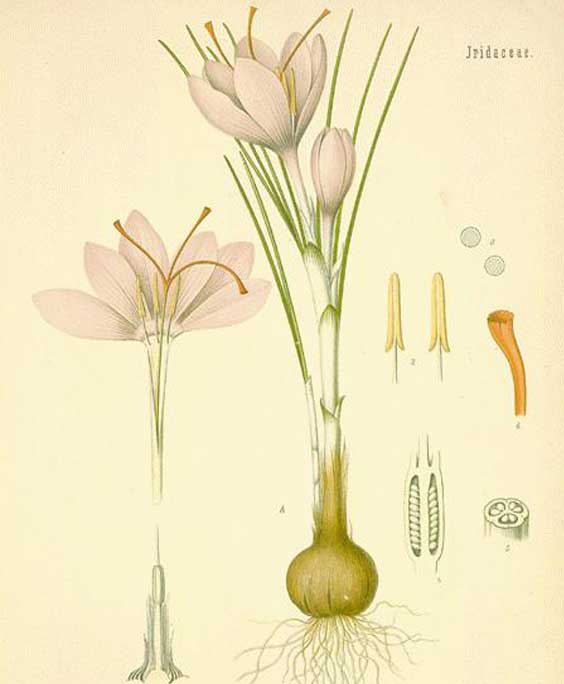
Family: Iridaceae
Which probiotic is it in?: Saffron is a key herb in Bio-Live Women.
Habit and cultivation: Although this plant can tolerate the cold winters well, its ultimate environment is hot dry summer breezes similar to the Mediterranean climate, and direct sunlight in areas that slope towards the sun. Now grown in many areas of the world under conditions to suit the individual regions.
Actions (known for): Antiseptic, anti-depressant, anti-oxidant, digestive, anti-convulsant, emmenagogue and nervine tonic.
History of Saffron
Parts used from the Saffron
Flower pistils (stigma).
Constituents (bio available chemicals):
Crocin, a-crocin, safranal, cineole, phenethenol, pinene, borneol, geraniol, limonene, p-cymene, linalool and terpinen-4-oil.
Nutritional constituents:
Vitamins: A, C, Folates, B3 and B6. Minerals: potassium, sodium, zinc, manganese, calcium, iron and copper.
Indications:
Assists in the control of blood pressure and heart rate, adjunct cancer therapy, anti-depressant, Alzheimer’s disease and menstrual disorders.
Dosage:
1.5g daily.
British Herbal Pharmacopoeia
Cautions for therapeutic doses
Pregnancy and breast feeding.

