

For decades now humans have been disturbing the natural balance of microbes with our over-use of chemicals and antibiotics.
Microbes, also known as single-cell organisms, may be invisible, but they live on and in everything: the mountains and oceans, plants and animals, soils and food, and in and on us.
Within each of these habitats, trillions of microbes live together in communities called microbiomes. We now know that these complex communities play a crucial role in maintaining health in any environment. They help humans and animals thrive, ensure plants grow big and strong, and make our homes pleasant places to be in.
And they have been doing that for billions of years.
What is new is not their importance. What is new is our understanding of just how deeply we depend on them and how much we risk by disrupting them.
The growing threat of antibiotic resistance
In our attempt to control harmful bacteria, often with good intentions, we have unintentionally enabled an environment where microbes mutate to resist antibiotics and become more dangerous.
A growing list of health concerns including pneumonia, tuberculosis, blood poisoning, gonorrhoea, and food-borne diseases are becoming harder, and occasionally impossible, to treat as antibiotics become less effective.
This is not abstract. It is happening now.
The UK Health Security Agency reported in 2023 that antibiotic-resistant bloodstream infections continue to rise, and globally antimicrobial resistance (AMR) is now recognised as one of the top ten public health threats facing humanity.
A landmark global analysis published in The Lancet in 2022 estimated that antimicrobial resistance was directly responsible for 1.27 million deaths in 2019, and associated with nearly 5 million deaths worldwide. That makes it comparable to AIDS and malaria.
The situation is close to breaking point in many health systems, including the UK’s. NHS data over recent years shows increasing hospital admissions linked to drug-resistant infections. In just six years, the number of patients with life-threatening infections failing to respond to antibiotics has risen significantly.
Antibiotic resistance is no longer a distant concern. It is a present reality.
Why is this happening?
The World Health Organization estimates that around 50% of antibiotics are used inappropriately. They are either prescribed for viral infections (which they cannot treat) or used as broad-spectrum agents when narrower treatment would suffice.
Overuse in agriculture compounds the problem. Antibiotics have historically been used in livestock to promote growth and prevent disease in intensive systems. Although regulation has improved in the UK and EU, global usage remains scarily high.
Every time antibiotics are used, susceptible bacteria die but resistant ones may survive and multiply. Antibiotics only kill 99.9% of bacteria but it is the 0.1% that mutates over time.
Microbes adapt quickly. That is their evolutionary genius.
When we apply repeated chemical pressure, we select for survival traits. Over time, resistant strains dominate.
The microbiome: an ecological system under pressure
Antibiotics do not only target pathogens. They affect entire microbial ecosystems.
When we take antibiotics, they disrupt the delicate balance of the gut microbiome. Research from King’s College London and other leading microbiome centres has shown that antibiotic use can significantly reduce microbial diversity, sometimes with long-lasting and damaging health impacts.
Diversity matters.
A diverse microbiome is more resilient, better able to resist invasion by pathogens, and more capable of maintaining immune balance. When diversity declines, opportunistic organisms can take hold.
The same principle applies in soil. Repeated chemical inputs can simplify soil microbial communities, reducing resilience and nutrient cycling capacity.
Whether in hospitals, farms or homes, the pattern is similar: simplified microbial ecosystems are fragile.
The world is waking up
The scale of the problem is now widely recognised.
In the UK, the Department of Health and Social Care has committed substantial funding toward antimicrobial resistance research, including multimillion-pound investment programmes aimed at developing alternatives to traditional antibiotics.
Globally, the UN General Assembly has declared AMR a major threat to sustainable development.
Scientists and public policy leaders are committing serious resources to finding solutions.
For anyone who knows the risks the future of antibiotic resistance is apocalyptic.

Learning from nature
A research team at the University of Bristol identified bioactive compounds in a deep-sea sponge living nearly 2km below the Atlantic Ocean with potential activity against MRSA which is a notorious drug-resistant bacterium that kills around 200 people in the UK each year.
Elsewhere, the nano-spiked surfaces of cicada and dragonfly wings have inspired antimicrobial coatings for medical implants. These natural structures physically disrupt bacterial cells without relying on chemical antibiotics. Research published in Nature Communications and materials science journals continues to explore these biomimetic surfaces.
Nature has evolved microbial control systems over millions of years. We are beginning to study, copy and respect them.
A probiotic lifestyle: working with microbes instead of against them
Like climate change, antibiotic resistance can feel overwhelming. It is easy to file it away as distant and hopeless.
But just as with climate change, there are actions individuals can take.
New technologies now allow us to isolate, multiply and deliver beneficial microbes, or probiotics, into a variety of environments.
In human health, probiotic supplementation during and after antibiotic use has been shown to reduce antibiotic-associated diarrhoea and support microbiome recovery.
In agriculture, microbial soil amendments can reduce reliance on synthetic inputs.
In the home, probiotic cleaning products introduce beneficial microbes rather than sterilising surfaces indiscriminately.
The shift is subtle but powerful: from eradication to balance.
Supporting the microbiome during antibiotic use
We also now know that using probiotics alongside antibiotics can be beneficial.
Research from the University of Copenhagen demonstrated that while the microbiome often begins to recover after antibiotics, some species may remain depleted for months.
More recent studies suggest targeted probiotic support may help restore ecological balance more effectively, though strain specificity and timing matter.
The important point is this: we no longer see microbes solely as enemies. We see them as ecosystems.
Changing the narrative: bugs are not the enemy
There is one thing we have to give up; the belief that all bugs are bad.
For more than a century, public health messaging equated microbes with disease. While hygiene and antibiotics have saved millions of lives and should rightly be recognised for the enormous human benefit that they have bought, the unintended consequence has been a cultural fear of microbes and environments that are too clean.
If antibiotic resistance teaches us anything, it is that short-term fixes are not necessarily long-term solutions.
Microbial biodiversity is not optional. It is an intricate life-support system for our planet and for us.
Recent ecological research published in Nature Reviews Microbiology emphasises that preserving microbial diversity may be key to preventing resistant strains from dominating.
From control to collaboration
Microbes created the conditions for life to evolve on Earth. They regulate oxygen production, nutrient cycling and decomposition. They form symbiotic relationships with plants, animals and humans.
They work continuously toward vitality and abundance.
Perhaps the lesson of antibiotic resistance is not that microbes are dangerous. It is that ecosystems are delicate.
When we interfere without understanding the complexity of what we are disturbing, unintended consequences follow.
When we collaborate, balance returns.
What you can do
While global policy and scientific innovation are essential, individuals still play a role:
- Use antibiotics only when prescribed and necessary
- Complete prescribed courses properly
- Avoid pressuring GPs for antibiotics for viral infections
- Choose farming systems that reduce chemical inputs
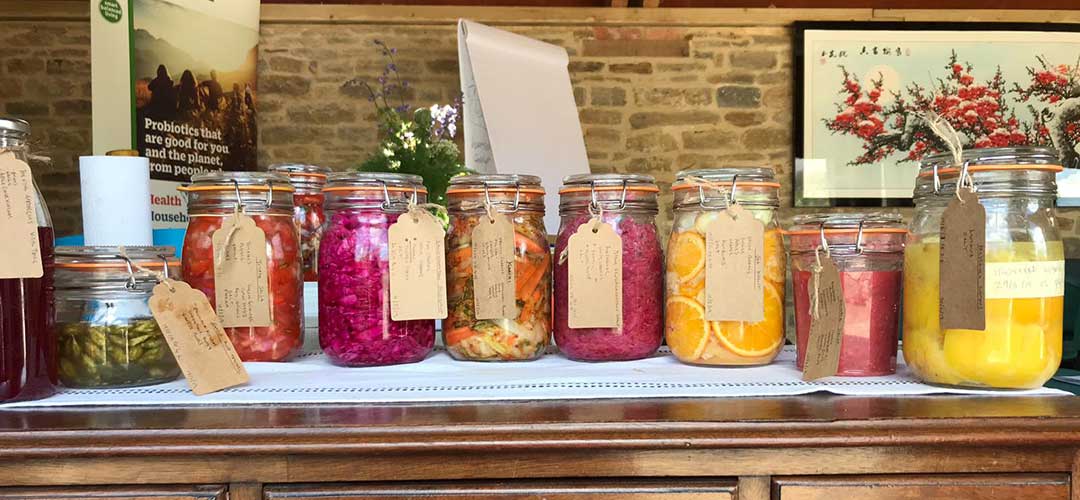
- Support microbiome diversity in diet and lifestyle
- Consider probiotic support when appropriate
For decades we have attempted to dominate the microbial world through chemistry and control. In doing so, we have unintentionally accelerated the rise of antibiotic resistance which is one of the most pressing health threats of our time.
But microbes are not the problem. Imbalance is.
References
World Health Organization (2023) Antimicrobial resistance fact sheet.
Nature Communications (2022–2024) Biomimetic antimicrobial surface research.
Department of Health and Social Care (UK) AMR Research Funding Announcements.