

We live in an age obsessed with understanding, measuring and optimising the human body. Yet the more we learn about the microbiome, the clearer it becomes that life is not something we can fully control, only collaborate with.
Week after week, research reveals how central our microbes are to human health. Scientists now talk openly about “pharmacomicrobiomics” – the way gut microbes can influence how medicines behave in the body, including effectiveness and side effects. Antidepressants are a good example: evidence suggests a two-way relationship, where antidepressants can shift microbial communities, and microbial communities may influence response and tolerability.
At the same time, we are learning that the microbiome does not exist in a vacuum. Social and environmental conditions shape it too. Multiple studies have reported associations between socioeconomic factors and gut microbiome diversity and composition, suggesting a biological layer to the health inequalities we see around us.
Back in July, you may have read an in-depth piece in the Observer by journalist Rebecca Seal, exploring why the microbiome has become one of the most important frontiers in modern health. Its most honest conclusion is also the most important: despite the explosion of interest in microbes, there is still a great deal we do not yet understand.
What we do know is that humans have evolved alongside microbes since the beginning of our story. The microbiome is not a single system, but a complex, living super-organ within the body, unique to each individual. And we are increasingly seeing that contact with the natural world matters. When our environments become simplified and sterile, our microbial exposure narrows too.
This is where modern science begins to echo something older, and arguably wiser.
What nature, art and literature have been saying all along
In literature, the natural world is often portrayed not as something to conquer, but something to belong to, learn from, and be held by. Rachel Carson, who was both a scientist and one of the great nature writers, framed the natural world as a source of resilience and renewal, not a machine to dominate.
Mary Oliver’s work repeatedly returns to the same quiet truth: that wellbeing begins when we stop trying to force ourselves (and the world) into perfect order and instead come back to attention, humility and belonging. Even a few words from her famous poem land like a nervous system reset: “You do not have to be good.”
And Wendell Berry, whose writing sits at the crossroads of agriculture, ecology and ethics, reminds us that our relationship with the earth is never neutral. How we treat the ground beneath us shapes the future we hand to those who come after.
These voices are not “anti-science.” They are a reminder that life is complex, interdependent and relational.
And this is exactly what microbiome science is now showing us.

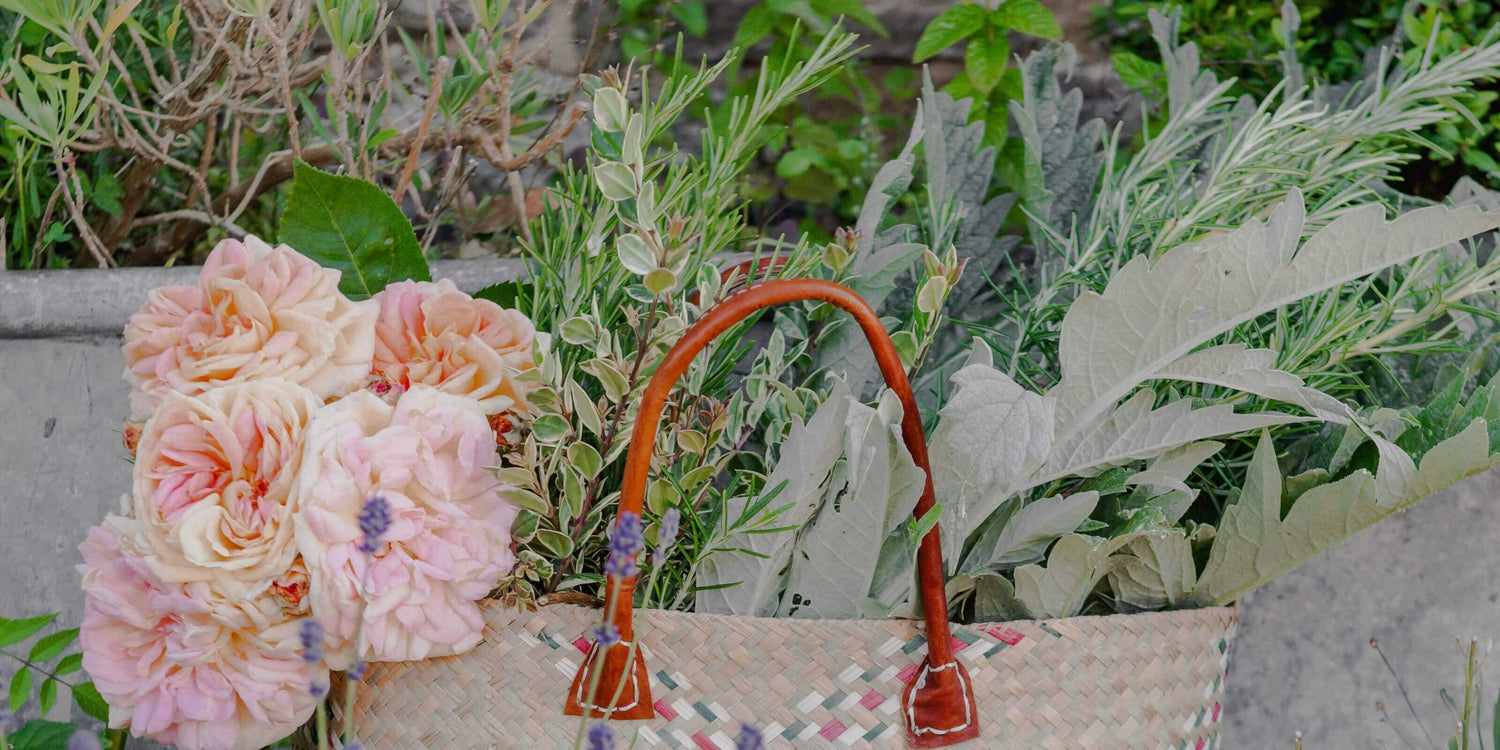
Image of a woman connecting with nature
The biodiversity hypothesis: microbes as an “outer and inner ecosystem”
There is a well-established scientific idea known as the biodiversity hypothesis, which proposes that contact with diverse natural environments supports a more diverse human microbiome, promotes immune balance, and may reduce the risk of allergic and inflammatory disease.
This isn’t just theory. One of the most striking real-world examples comes from Finnish daycare interventions where children’s play environments were “rewilded” with forest floor materials and living vegetation. Researchers observed changes in children’s skin and gut microbiota alongside shifts in immune markers consistent with improved immunoregulation. A later placebo-controlled, double-blinded trial also reported immune modulation associated with daily exposure to microbial biodiversity.
In other words: the microbial world outside us helps shape the microbial world within us.
This brings us to a tension at the heart of modern health.
Control vs trust: the modern story and its unintended consequences
As humans, we have a powerful instinct to categorise, isolate and control nature. But nature does not operate in straight lines or simple systems. The more we try to dominate it, the more unintended consequences we create.
Antibiotic resistance is one of the clearest examples of what happens when we underestimate microbial intelligence and adaptability. And in medicine more broadly, we are now recognising that microbes do not simply “sit there” while we intervene: they interact, respond, adapt, and sometimes push back.
At microbz, we believe the future of health lies not in overpowering nature, but in learning how to work with it. In going back to the building blocks of life and trusting the systems that have sustained living organisms for billions of years.
It is estimated there are vast numbers of microbial species on Earth, collaborating in complex, creative, ever-evolving ways. We may never fully disentangle every interaction. But we can choose our posture: domination, or relationship.
Microbes as masters of regeneration
We live in a polluted, toxic and ecologically damaged environment. Climate instability makes it plain that many of our linear, extractive approaches have failed.
Yet microbes offer a different model. For billions of years, they have closed the circle of life: breaking down organic matter, recycling nutrients, and transforming “waste” into the foundations for new growth. They are nature’s original circular economy.
And this is the spirit that guides our work at microbz.
What we do and why
We harvest our mother culture directly from soil, not because soil is fashionable, but because it is where microbial diversity naturally thrives.
Through testing, we know this living culture contains 15 main strains of beneficial bacteria working together in symbiosis. We ferment this culture with traditional herbs and minerals that have supported human health for centuries, allowing microbes to do what they do best: transform complex compounds into forms the body can recognise and use.
This is not about forcing outcomes or engineering perfection.
It is about creating the conditions for life to organise itself.
We trust the microbes we harvest from nature, and we trust the innate intelligence of the human body. When given diverse, living microbes, the microbiome has an extraordinary capacity to move towards balance in its own way and in its own time.
We may never fully understand how Mother Nature does what she does.
And perhaps that is not a problem to solve, but a relationship to rebuild.
References